Trade union denounces slave-like labor regime
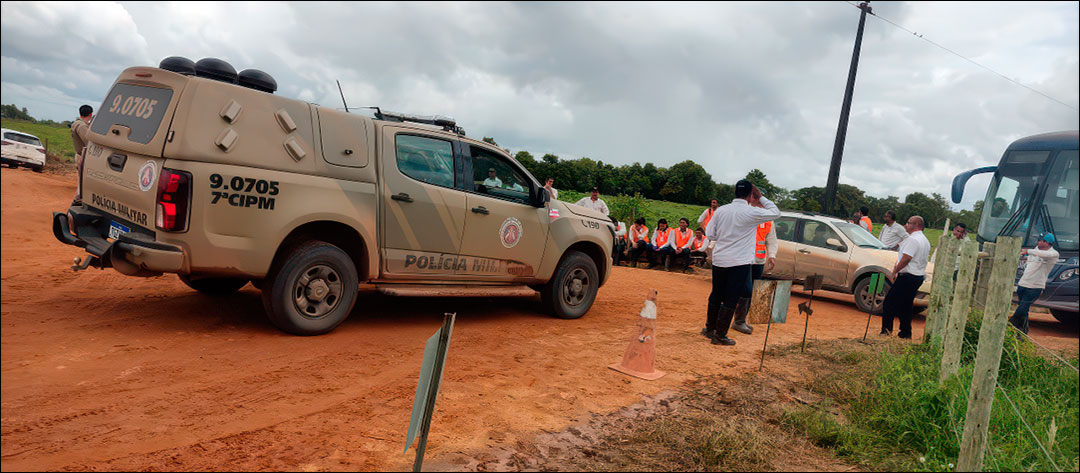
The Eunápolis Rural and Forestry Workers’ Union (Bahía), which represents workers of Veracel Celulose, a company owned by the Finnish corporation Stora Enso, launched a strike for an indefinite period of time against a unilateral decision by management to change the work day that translates into what workers denounce is a slave-like regime.
Amalia Antúnez
5 | 12 | 2025
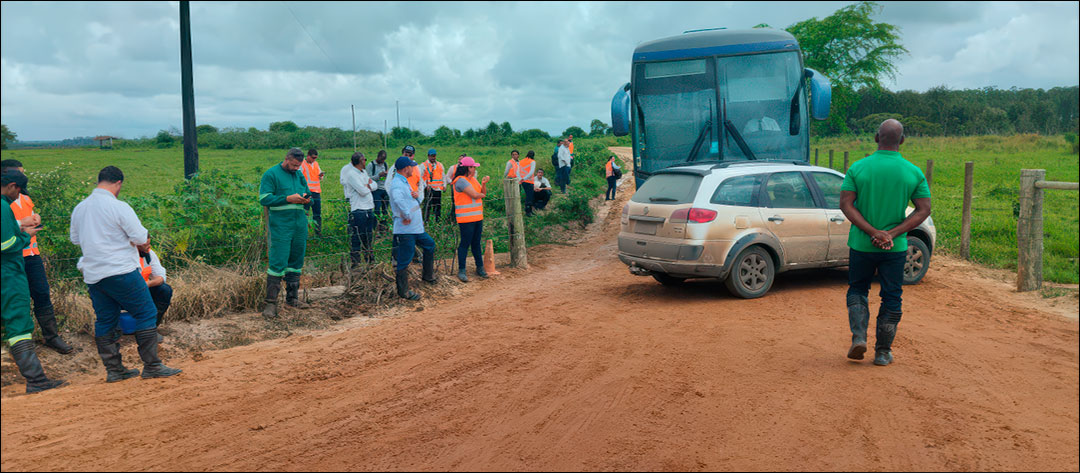
In conversation with La Rel, Damiana Alcántara, Fabricio Nascimento, and Arisvaldo de Jesús, Veracel workers and members of the union steering committee, explained that the company decided to unilaterally impose a new work schedule of six work days and only one rest day (6×1), without any kind of economic compensation.
The measure, which went into effect on November 1, was considered by the union and most of the workers on the payroll as a “slave-like regime,” because of its direct impact on the health, family life, and safety of workers that are operate in continuous shifts.
Historically, workers on these shifts have had intense schedules, but at least they were guaranteed minimum rest cycles.
Four years ago, Veracel implemented a trial schedule of 6×1, 6×2, and 6×3, acknowledging that it increased the workers’ physical exertion and affected their quality of life.
To compensate, the company paid each worker a bonus.
In the following years, the company renewed the agreement with lower bonuses, always admitting that the schedule caused specific harm to workers’ health.
This year, however, it announced that it would not be paying any compensation at all, alleging financial difficulties, while at the same time publicly projecting an image of a “sound company” and “one of the best places to work in”.
Faced with the imposition of a schedule of six days of work and one day of rest, the workers rejected the proposal and approved the strike. Ninety percent of the workers voted to strike, in a decision that met all legal requirements.
After the mandatory 72-hour-wait, the strike began.
Following more than 40 hours of stoppage, the union invited the company to a new instance of dialogue, but the company failed to respond.
Instead of negotiating, it filed a court brief accusing the union of irregular work stoppage, something that, according to the union, is not true, as the strike was decided democratically in a workers’ assembly.
During this process, the workers reported several pressuring measures on the part of the company, including psychological harassment, threats to anyone who wanted to join the strike, and warnings of possible cancellations of contracts and loss of benefits.
The union argues that these practices “are illegal and violate the constitutional right to strike,” in addition to worsening what they consider is a systematic deterioration of labor dignity and health.
“We will not accept a regime that destroys the lives of the workers,” the union leaders declared.
Accepting this system without compensation would entail normalizing a work model that “borders on the inhumane and constitutes a slave-like regime,” they said.
The union says it will continue to negotiate, but warns that it will not back down in its defense of fair working conditions.
The conflict at Veracel is part of a broader debate: Brazil’s labor movement is currently conducting a national campaign to end the 6×1 schedule, denouncing its harmful effects on the physical and mental health of millions of workers and defending workday models that respect human life and dignity.