Against the violation of basic rights in La Constancia
There are companies that innovate in their production processes. Others innovate in the way they handle labor conflicts. Then there is La Constancia, a subsidiary of AB InBev and Coca-Cola in El Salvador, which seems to have found an original approach to innovation.
After both the union, SITRACONSTA, and Rel UITA (IUF Latin America) publicly denounced that several Coca-Cola workers had been fired after a procedure that used a lie detector as a “means for gathering evidence,” the company did not vow to abandon such a practice as a way of repairing the situation denounced.
Neither did it decide to conduct an evidence-based investigation or to respect due process or accept that a machine is not a legitimate substitute for a serious investigation.
Instead, it came up with a much more creative solution: asking workers to sign a written consent form before subjecting themselves to the lie detector.
This stroke of genius deserves to be recognized.
According to the company, a right is no longer violated if the victim signs a piece of paper waiving that right. It is a revolutionary theory of labor law. In the future, if somebody decides to accept an 18-hour workday or waives their wages, would that also be acceptable? Will a signature be enough to repeal the Labor Code?
That appears to be the logic.
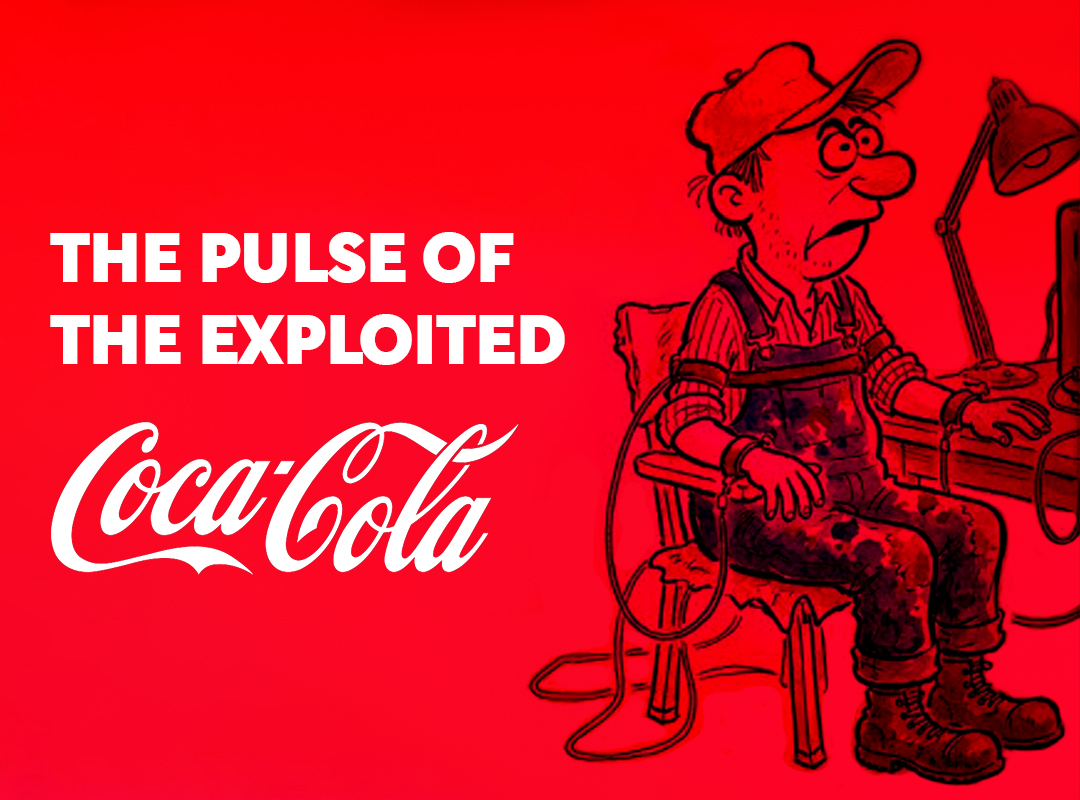
There is a tiny detail, however, that might be overlooked: workers are asked to sign the consent form while under a relationship in which one party determines the other’s employment, wages, and economic stability and has the power to fire them. The other party basically only has the need to keep their job.
But let us not exaggerate. Surely that imbalance of power makes no difference at all. The worker is completely free to say “no” and refuse to sign. Exactly the same freedom a passenger has to refuse a parachute when the plane they are on has lost its wings.
The consent form also offers the company an additional advantage: it shifts the focus of discussion. The questionable nature of the lie detector is no longer an issue, neither is the fact that it has no value in terms of determining responsibilities. The debate now revolves around whether or not the worker accepted to be subjected to such a procedure.
This is an old strategy: whenever a practice is indefensible, the approach taken is to try to create an armor around it. A piece of paper becomes more important than a right. Reality, however, is much more sophisticated than that.
Consent secured in an obviously unequal relation of power can hardly legitimize a practice, which shall remain questionable despite the consent. The packaging changes, but not the content.
The lie detector is still the same apparatus incapable of distinguishing between a liar and a person who is nervous, worried, or simply afraid. Evidence is still replaced by suspicion. And the investigation, if there is one at all, still starts from the end: a suspect is first identified and only then does the search for motives begin.
Perhaps the next step will be even more innovative.
In addition to signing a consent form for the lie detector, the company may request workers to sign a document declaring that, if the machine decides they are lying, they agree to be fired, waive their compensation, and thank the company for the opportunity of participating in the procedure.
After all, a signature is always useful.
Because when a company needs the worker’s consent to justify the unjustifiable, the true detector of lies is not, perhaps, the polygraph machine but the consent form itself.
